

Mona Lisa – A Renaissance Muse, Reimagined

Some works of art stay with us for centuries. The Mona Lisa is one of them. There is something about her expression, her clothing and the landscape behind her that has always fascinated me. For this project, I wanted to take a closer look at the painting and explore how I could bring its details into my own work.
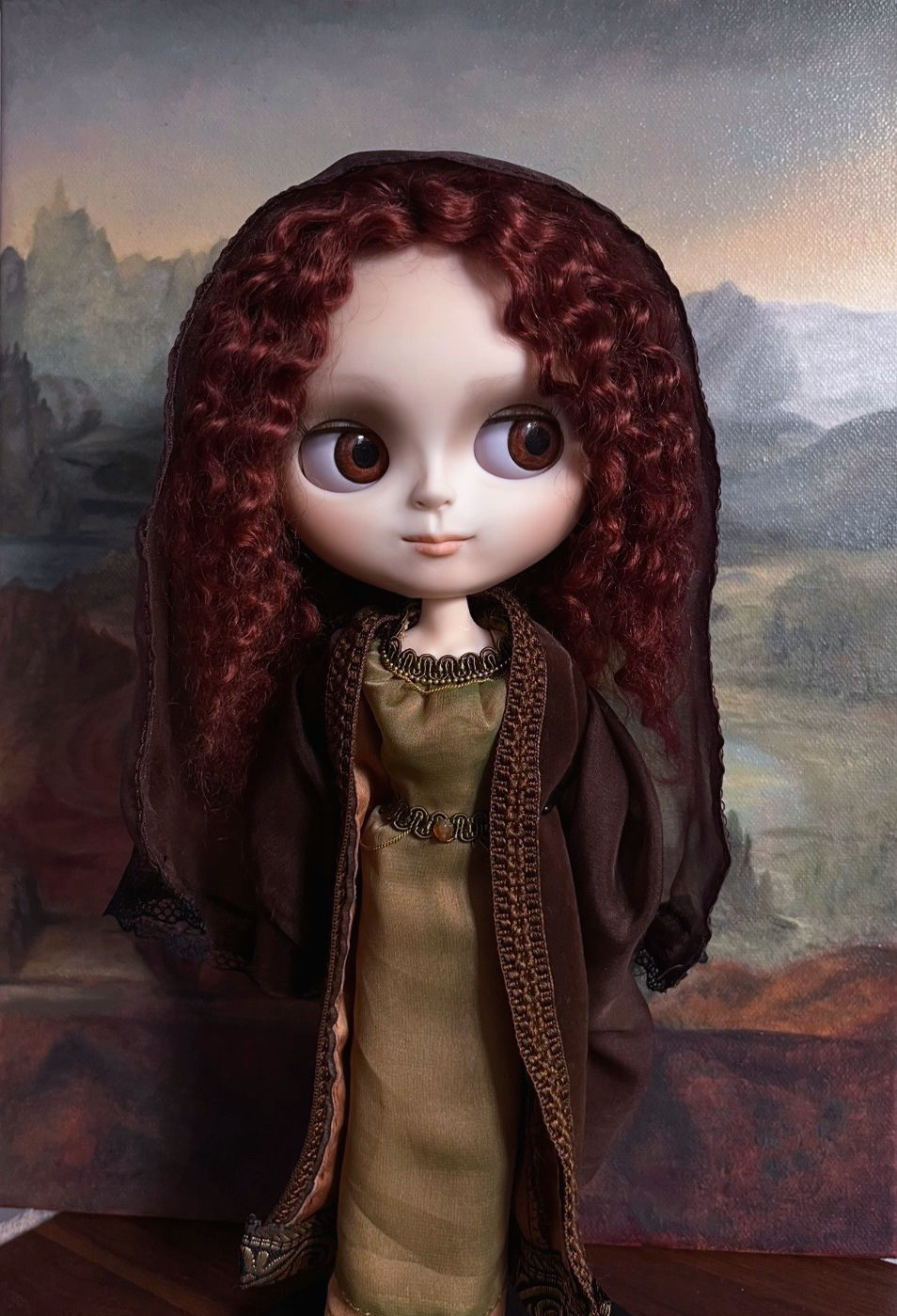
I created a Mona Lisa-inspired Blythe doll, using Leonardo da Vinci’s famous painting as my reference. Rather than simply recreating her appearance, I wanted to incorporate different elements of the original artwork into the doll, giving each detail its own meaning.
Four pairs of eyes, four different ideas
One of my favourite parts of creating a Blythe doll is designing the eyes. Each doll has four different pairs, and I always try to give them a personal connection to the theme.
For the Mona Lisa, I wanted each pair to represent a different part of the artwork and its history.
The first pair features the original brown eyes, inspired by the painting itself.

For the second pair, I took inspiration from Raphael’s drawing "Sistine Madonna". There are those two famous little angels on the bottom. I painted the clouds from the background myself, incorporating them into the design.
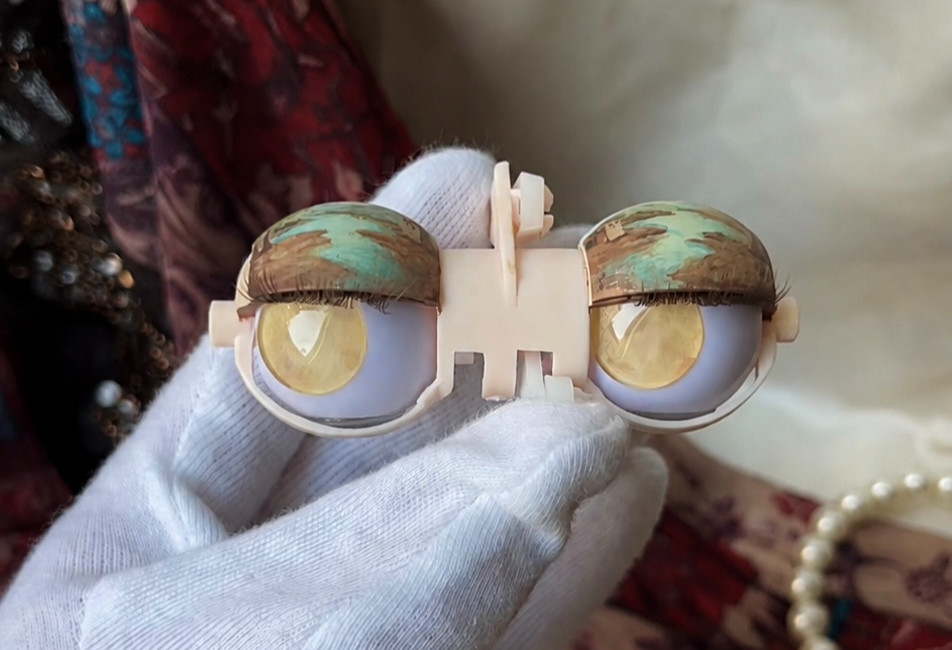
The third pair has an aged, Renaissance-inspired appearance. I wanted the colors and textures to resemble the patina of an old oil painting, as though the eyes themselves had travelled through time.

For the fourth pair, I chose something a little different: small mirrors. The idea came from the many people who visit the Louvre to see the Mona Lisa. While looking at her, we also become part of the experience. In the mirrors, the viewer sees their own reflection — a small reminder that beauty is not only something we admire in others, but something we can recognize in ourselves, too.

A Landscape inspired by Tuscany
The landscape behind the Mona Lisa is often overlooked, yet it is one of the details I find most beautiful about the painting. The winding paths, distant mountains and soft colours create a world of their own.
For the doll, I painted a Tuscan landscape on the eyelids, inspired by the scenery and atmosphere of the original artwork. Tuscany also has a personal connection to Leonardo da Vinci, who was born in the region.
I wanted the landscape to feel like a small extension of the painting, connecting the doll to the world in which the original masterpiece was created.

Bringing the Mona Lisa to life
The first step was working on her face. I wanted to stay close to the original painting, especially when it came to her expression, her brown-reddish hair and the colors of her clothing.
I carefully worked on her features to achieve a soft, natural look. I also paid attention to the small details that make the Mona Lisa so recognizable. My aim was to keep her appearance as close to the original as possible while still giving her the characteristic look of a Blythe doll.

A portrait on the back of her head
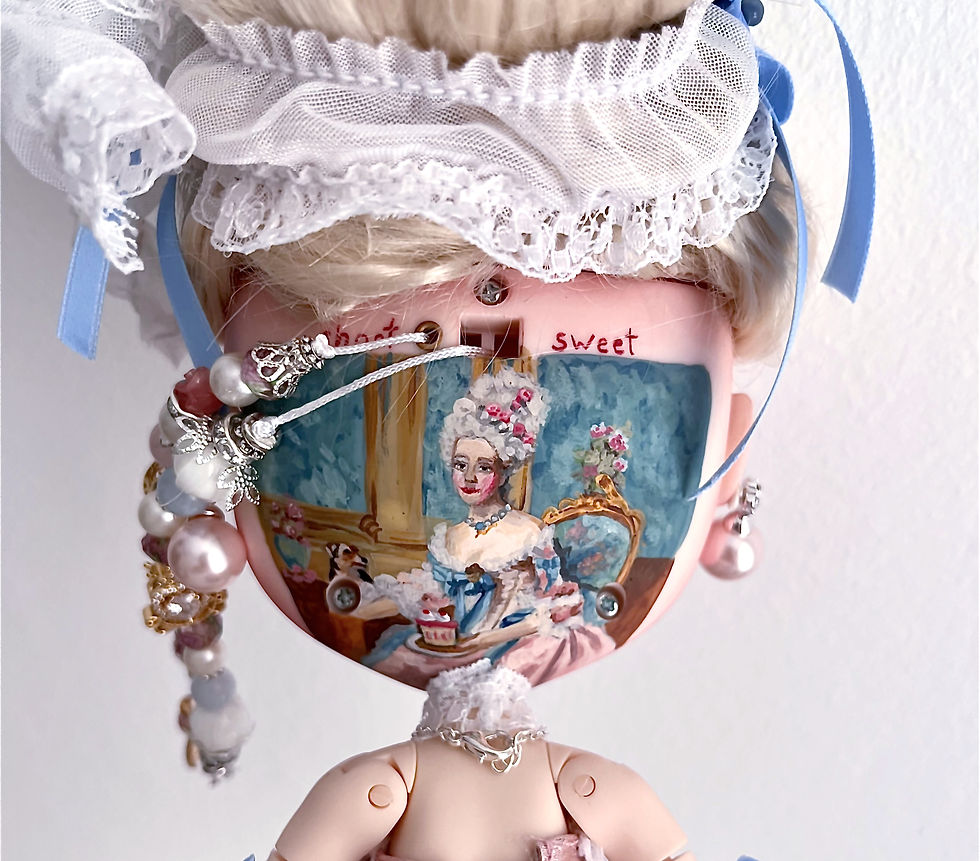
One of the most special details of this doll is the Mona Lisa portrait hand-painted on the back of her head. I recreated Leonardo da Vinci’s original portrait in miniature, carefully working with the delicate features and subtle expression that make the painting so recognizable.
Portrait painting has always been an important part of my artistic practice, so incorporating it into this project felt especially meaningful. It brings the original masterpiece directly into the doll itself, making her a unique piece that connects my love for classical art with my work as a Doll artist.

The process began with studying the composition and sketching the main shapes. From there, I started building the painting step by step, paying attention to the soft transitions and muted colors that give the original its distinctive atmosphere.
It became a project that brought together two parts of my artistic work: customizing Dolls and painting on canvas.

A Renaissance inspired wardrobe
The outfit was an important part of this project. I wanted to recreate the feeling of Renaissance clothing, paying attention to the fabrics, colors and silhouette rather than simply making a miniature version of the original dress.
I sourced high-quality materials, including silk and velvet, to give the outfit the right texture and depth. The combination of these fabrics helped me achieve the rich, understated look I had envisioned.
Every piece of the outfit was sewn by hand, with care given to the small details and proportions. Working on such a small scale requires patience, especially when handling delicate fabrics, but it was important to me that the clothing felt as carefully considered as the rest of the doll.
I wanted her to look as though she belonged in a Renaissance portrait, while still retaining the individuality of a handmade Doll creation.

A Closer Look at the World Behind Her
The landscape in the background of the Mona Lisa inspired me to take this project a step further. I decided to paint the scenery myself on an oil canvas, studying the original painting and recreating the landscape by hand. I wanted to explore the details that are so often overlooked, from the winding paths to the distant mountains and the soft, muted colors.
Painting the background allowed me to spend more time with the original artwork and understand it from a different perspective. It also brought another part of my artistic practice into this project, connecting my love for oil painting with my work as a Blythe doll artist.

A piece of art - made by hand
Creating this doll was an opportunity to combine my love for portrait painting, historical art and detailed craftsmanship. From her hand-painted face and individually designed eyes to her silk and velvet outfit, every element was created with the same intention: to make a
piece that feels thoughtful, personal and true to its inspiration.
This Mona Lisa-inspired Blythe doll is a one-of-a-kind creation. She is my interpretation of a painting that has fascinated people for generations, brought into a new form through my own artistic practice.
For me, the most rewarding part of a project like this is discovering how much more there is to see in a work of art when you take the time to study it closely.



Comments