

Empress Elisabeth of Austria: The spirit of the 19th Century

Empress Elisabeth of Austria, often lovingly called Sisi, remains one of the most fascinating historical figures of the 19th century. Known for her extraordinary beauty, independent spirit, and iconic style, she continues to inspire art, fashion, and dolls to this day.

The historical significance of Empress Sisi
Elisabeth Amalie Eugenie was born on December 24, 1837, in Munich, Bavaria. At just 16 years old, she married Emperor Franz Joseph I of Austria and became Empress of Austria and later Queen of Hungary. Her life, though glamorous on the surface, was marked by strict court rules, personal struggles, and a longing for freedom. She lived during the height of the Romantic era and the early Victorian period, and she died tragically in 1898.
Beauty Ideals of Sisi’s Time
In the 19th century, beauty ideals were very different from today. Pale skin was considered a sign of nobility, as it showed one did not work outdoors. Women admired long, thick hair, delicate facial features, and a slim waist. Sisi was famous for her exceptionally long chestnut hair, which reached below her knees and required hours of care each day.
She followed strict beauty routines, including elaborate hair care, exercise, and careful dieting - quite unusual for her time. Her beauty became legendary, and portraits of her were carefully controlled to maintain her youthful image.
Creating “Sisi” – The Story Behind the Doll
Sisi’s style is a beautiful source of inspiration for Blythe dolls. Romantic gowns, soft pastel colors, intricate hairstyles, and historical accessories can all be reimagined in miniature form. Her iconic hair, graceful posture, and dreamy presence fit perfectly into the world of Blythe, blending history with fantasy.
The concept and the eyes
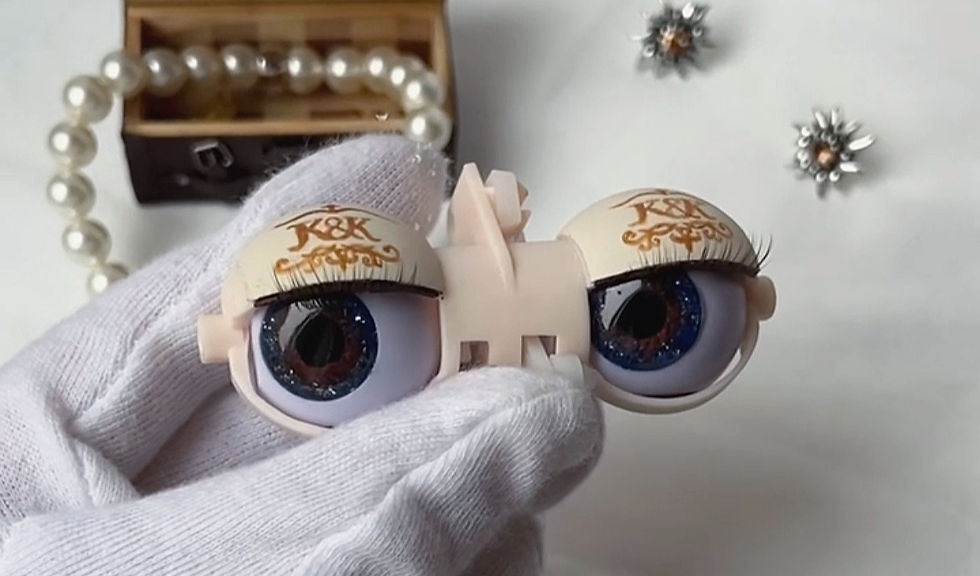
Blythe dolls are unique because they have four different pairs of eyes, which can be changed using a special internal mechanism. For this doll, each eye set was carefully designed to reflect an important part of Sisi’s life and personality.
The first eye pair represents her natural brown eyes, symbolizing her real, human presence behind the imperial image.
The second eye pair shows a night sky filled with stars. Sisi deeply loved the stars and the night - they stood for freedom, dreams, and her poetic soul.
The third eye pair features Schönbrunn Palace, the most iconic residence of the Austrian imperial family and a central place in her life as Empress.
The fourth eye pair reveals a forest landscape, representing the places where Sisi felt most at peace. Nature, walking, and solitude were essential to her, and the forest became her refuge from court life.
Each eye design was created with the intention of making the doll feel alive, emotional, and deeply connected to Sisi’s story.
The hand-painted portrait
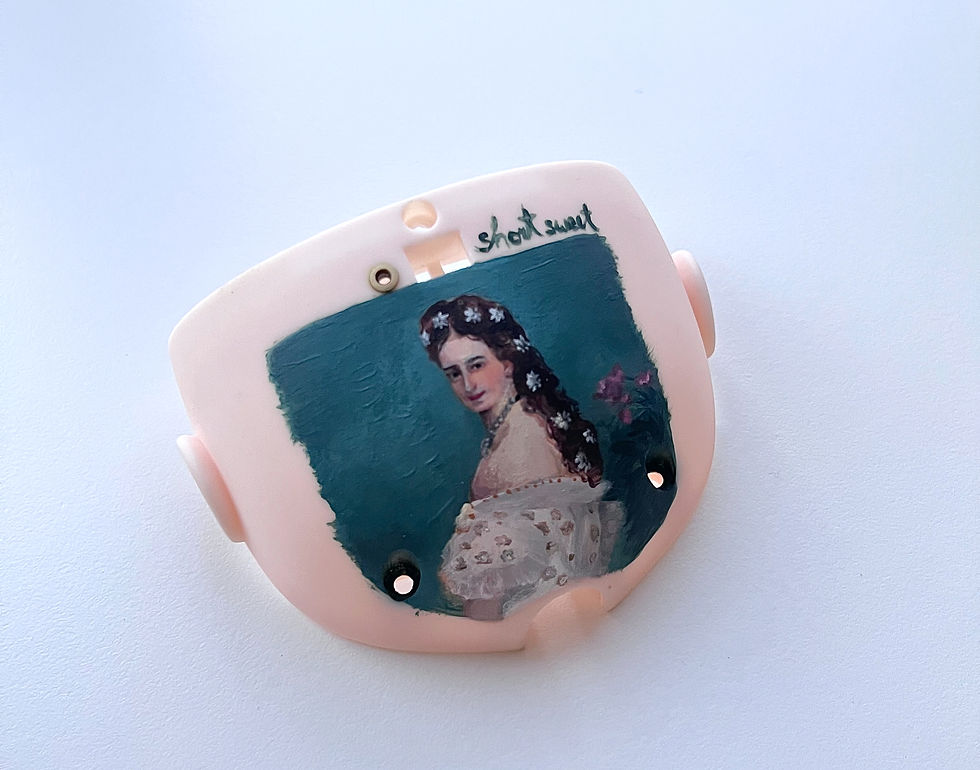
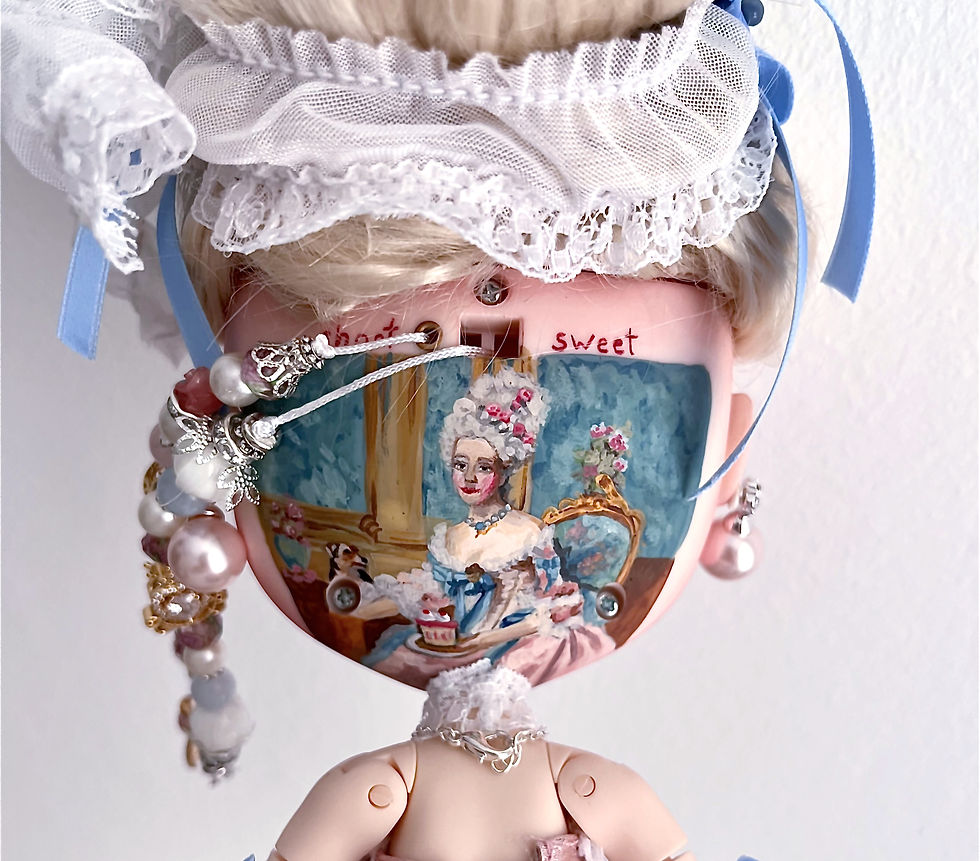
One of the defining characteristics of my dolls is the hand-painted artwork on the back of the head. Each doll carries a hidden piece of art - something personal, intimate, and unique. For Sisi, this detail was especially important.
I chose to recreate the famous portrait of Empress Elisabeth that is known all over the world - the image that has shaped how generations imagine her beauty and elegance. With great care and attention to detail, Sisi’s portrait was painstakingly painted by hand using acrylic paints, directly onto the back of her head.
The Dress – A Handmade Tribute to the Star Gown
Sisi’s dress was entirely sewn by hand, with great care and dedication to historical inspiration. For the fabric, silk-like materials were carefully selected to achieve a soft, flowing appearance that reflects the elegance of imperial fashion.
The design is inspired by Sisi’s famous star gown, one of the most iconic dresses in European history. This gown, with its delicate stars, has become a symbol of her timeless beauty and her love for the night sky.
Each star was individually placed by hand using tweezers, a slow and meticulous process that required patience and precision. No two stars are exactly the same, giving the dress a unique, handcrafted character. The careful placement was meant to mirror the sparkle and movement of the original gown while adapting it to the miniature scale of a Blythe doll.

Materials from Austria
Almost all materials used to create this doll were sourced from Austria, honoring Sisi’s homeland and adding authenticity to the project. From fabrics to small details, every element was chosen with care, quality, and respect for tradition.
A timeless piece for your home
The Sisi doll is more than a collectible - it is a piece of art that enriches any home. With her symbolic eyes, hand-painted portrait, and meticulously crafted dress, she brings history, elegance, and storytelling into a living space. Whether displayed on a shelf, in a glass cabinet, or as part of a curated collection, Sisi adds a sense of romance, depth, and quiet beauty. She invites viewers to pause, to look closer, and to feel connected to a timeless story of grace and individuality. Owning this doll means welcoming a small yet meaningful work of art into your home - one that carries emotion, craftsmanship, and the spirit of Empress Elisabeth with it.
A timeless muse
Empress Elisabeth was more than a royal figure - she was a symbol of beauty, longing, and individuality in a highly controlled world. Her life and style continue to inspire modern creatives, from fashion designers to doll artists. Bringing Sisi into a Blythe doll universe allows her story to live on in a new, imaginative way.


Comments