

Marie Antoinette: Timeless elegance in doll form

Marie Antoinette, the last queen of France before the French Revolution, is known not only for her controversial political decisions, but also for her inimitable style and elegance. These qualities have made her a timeless figure who continues to fascinate in today's culture. In this blog post, we will explore the different facets of Marie Antoinette's style and influence, particularly in the world of dolls and collectibles.

The historical significance of Marie Antoinette
Marie Antoinette was born in Vienna in 1755 and married the French heir to the throne, Louis XVI, in 1770. Her arrival in France was eagerly anticipated, but she soon became the target of criticism and rumors. Despite her political difficulties, her legacy remains strong, particularly in terms of fashion and style.
Fashion and style in the 18th century
In the 18th century, fashion was an expression of status and power. Clothing was often extravagant and elaborate, with many layers and embellishments. Marie Antoinette was known for setting the latest fashion trends and was a pioneer in the world of fashion. Her dresses were often adorned with fine fabrics, lace, and elaborate embroidery.
Influence on fashion
Marie Antoinette had an enormous influence on fashion. She helped popularize the Rococo style, which is known for its playful and romantic designs. Her preference for pastel colors and floral patterns inspired many designers and remains a popular trend to this day.
The eyes and makeup – A reflection of her world
Great care was taken in designing Marie Antoinette’s eyes and makeup, as these elements are essential in capturing her presence and the era she lived in. Blythe dolls feature four interchangeable eye pairs, and each set was thoughtfully created to reflect a different aspect of her life.
The first eye pair represents her natural blue eyes, emphasizing her youthful elegance and historical authenticity.
The second eye pair features a pattern inspired by the 18th century, echoing the decorative motifs and ornamental richness of the Rococo era in which she lived.
The third eye pair is adorned with flowers, symbolizing the gardens where Marie Antoinette spent much of her time (Petite Trianon). These floral eyes reflect her love for nature, calmness, and the private world she created for herself. A retreat from the rigid court etiquette
The fourth eye pair is a rich violet tone embellished with gemstones, representing nobility, luxury, and the opulence of the aristocracy of her time

The face itself was carefully sculpted and sanded to match the beauty ideals of the 18th century - soft features, smooth transitions, and a delicate, refined expression.
The makeup was created by closely studying historical portraits of Marie Antoinette.
Soft blush tones, subtle shading, and balanced highlights were applied to recreate the painted elegance of the era while maintaining a natural harmony suited to the doll’s scale.
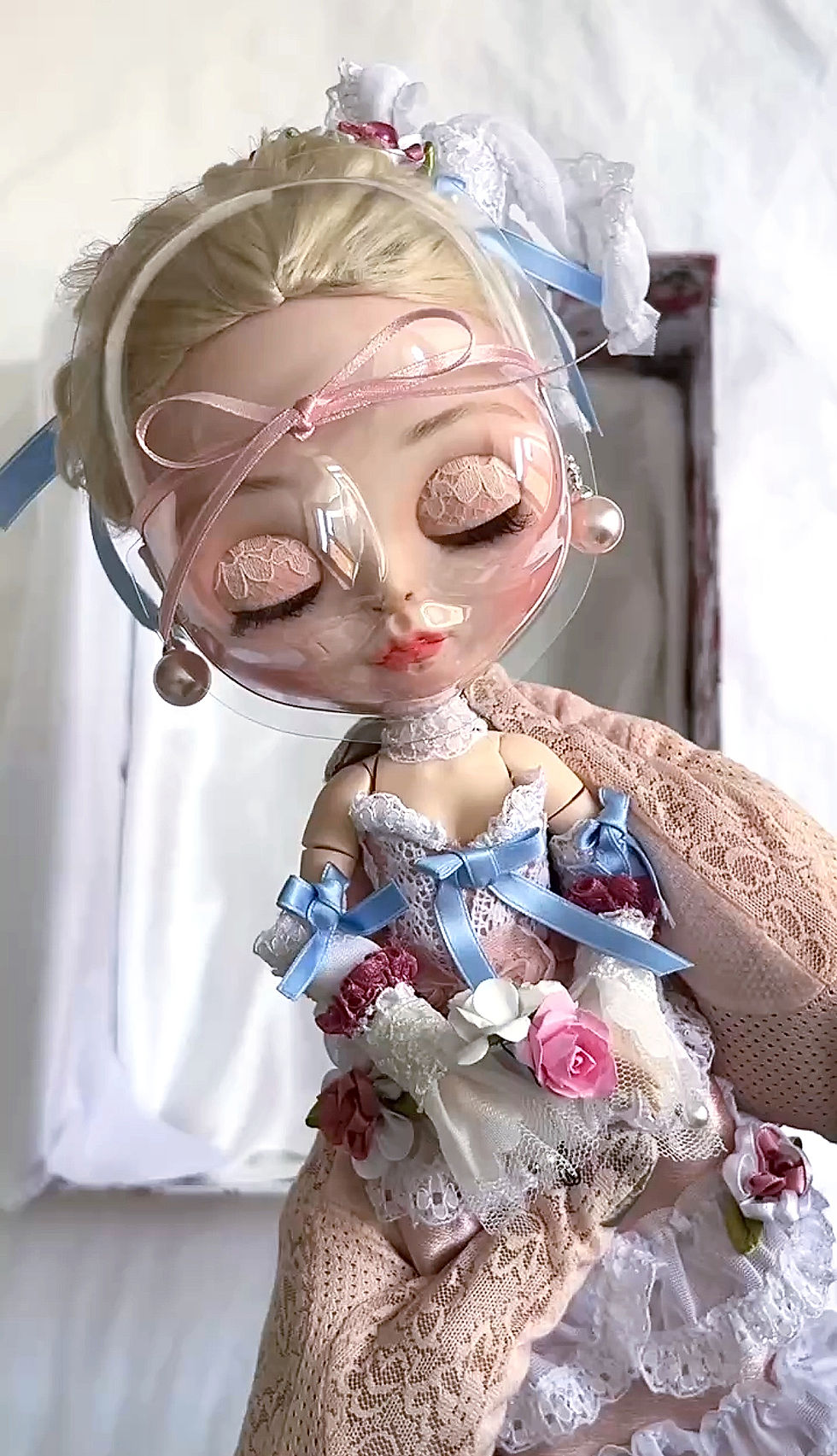
In addition, the eyelids were decorated with real lace, carefully applied to add texture, softness, and an unmistakable touch of historical elegance.
Together, the eyes and makeup tell a visual story - one of status, femininity, nature, and history - bringing Marie Antoinette’s world to life in a miniature yet expressive form.

The hand-painted portrait
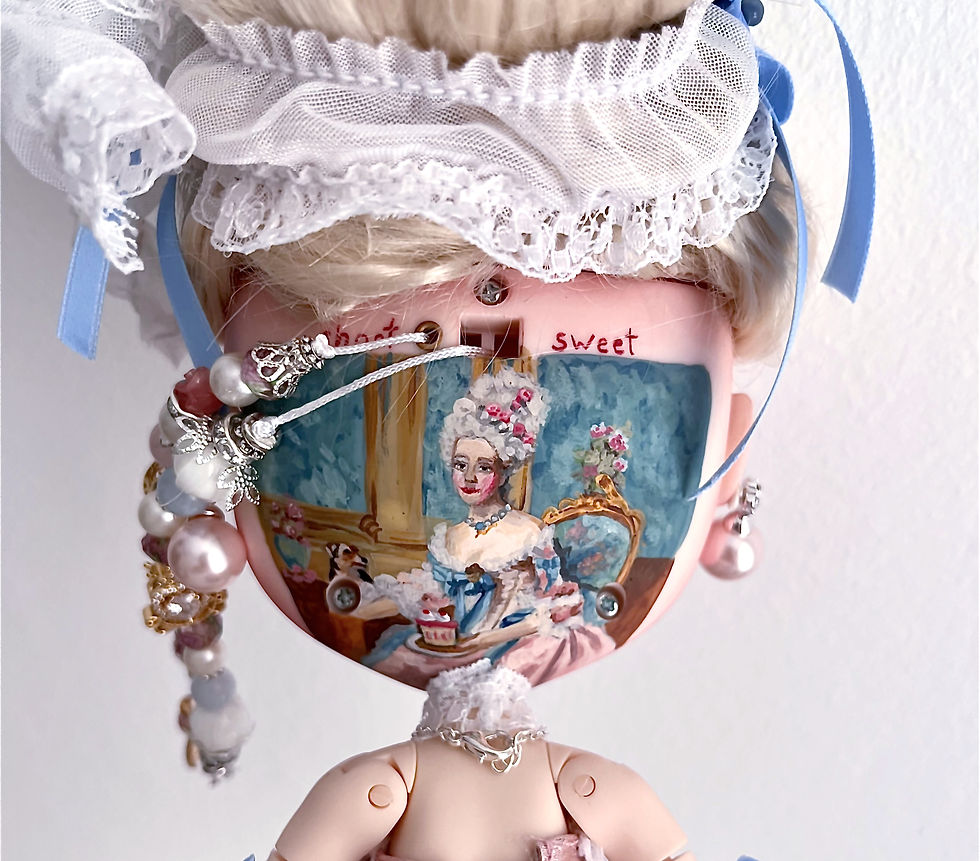
The back of the doll’s head features a hand-painted portrait inspired by one of the most famous images of Marie Antoinette. The scene shows her seated at a table, dressed in a soft pink and white Rococo gown, a symbol of refinement and courtly elegance. On the table, delicate cakes are arranged, reflecting the luxurious lifestyle of the French court, while her beloved dog rests beside her, adding a gentle and intimate touch to the composition.
Creating the dress
The creation of Marie Antoinette began with the dress. Before a single stitch was made, a detailed design sketch was carefully drawn to capture the spirit of 18th-century French court fashion. The goal was to translate historical elegance into miniature form while preserving balance, proportion, and authenticity.
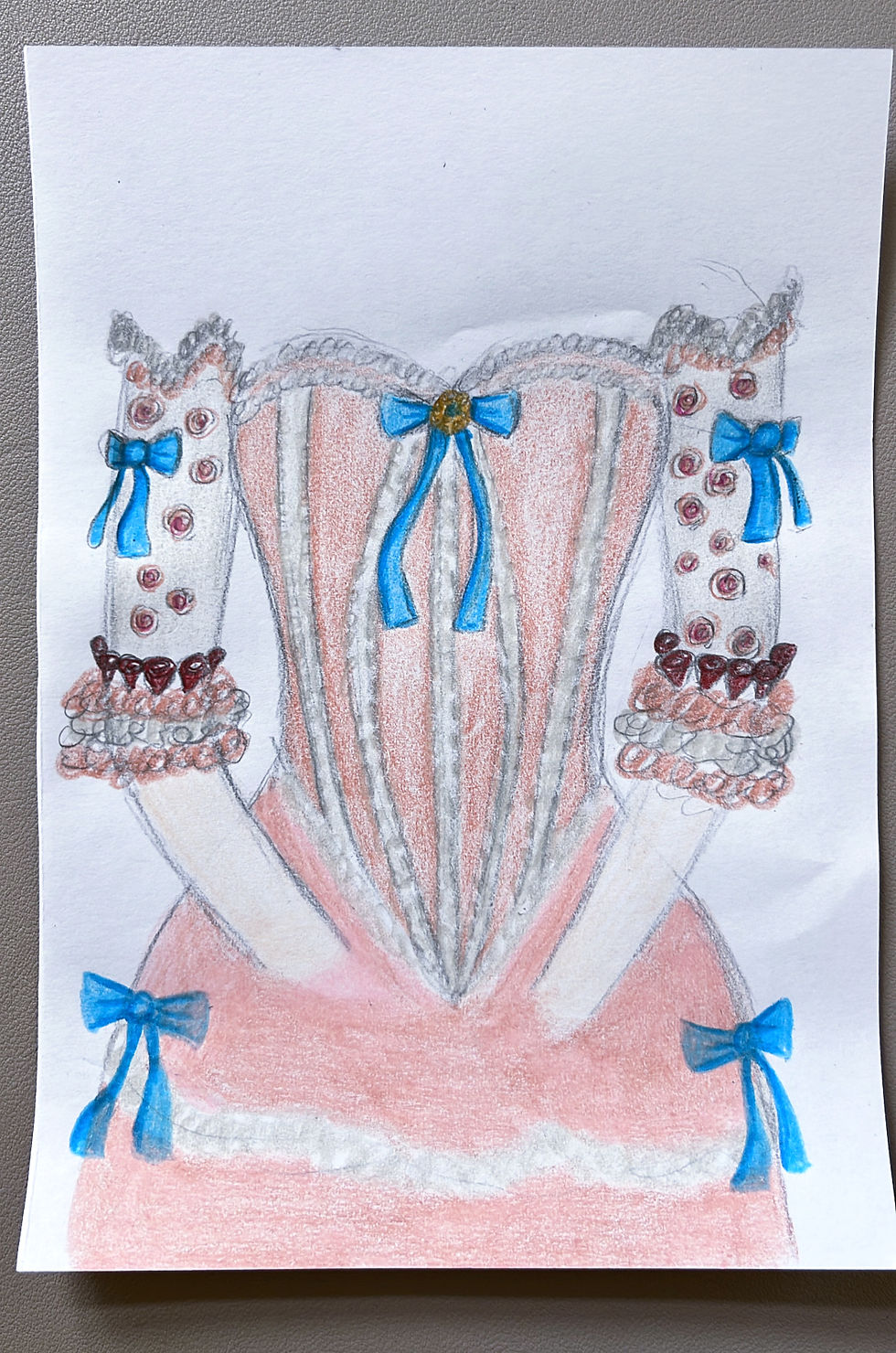
The dress was then entirely sewn by hand, a slow and deliberate process that allowed every seam, fold, and layer to be refined. Remarkably, the gown was crafted in France, on the Côte d’Azur, adding a meaningful geographical connection to Marie Antoinette’s life and legacy.
Every detail was treated with great care - from the choice of fabrics to the smallest decorative elements. Nothing was rushed, and nothing was left to chance. This attention to detail ensures that the dress is not just clothing, but a carefully constructed tribute to craftsmanship, history, and timeless beauty.

The results
Down below are images of the finished Marie Antoinette, capturing her final details and character.



Conclusion
Marie Antoinette remains a fascinating figure whose influence on fashion and culture can still be felt today. Her portrayal in doll form is not only a tribute to her elegance, but also a valuable piece of history. Whether as a collector's item or a source of inspiration for modern designers, Marie Antoinette's timeless elegance continues to be appreciated and admired.
The next generation of collectors and designers will continue to be inspired by her style and grace. If you have the opportunity to purchase or view a Marie Antoinette doll, take the opportunity to experience a piece of this fascinating history.


Comments